
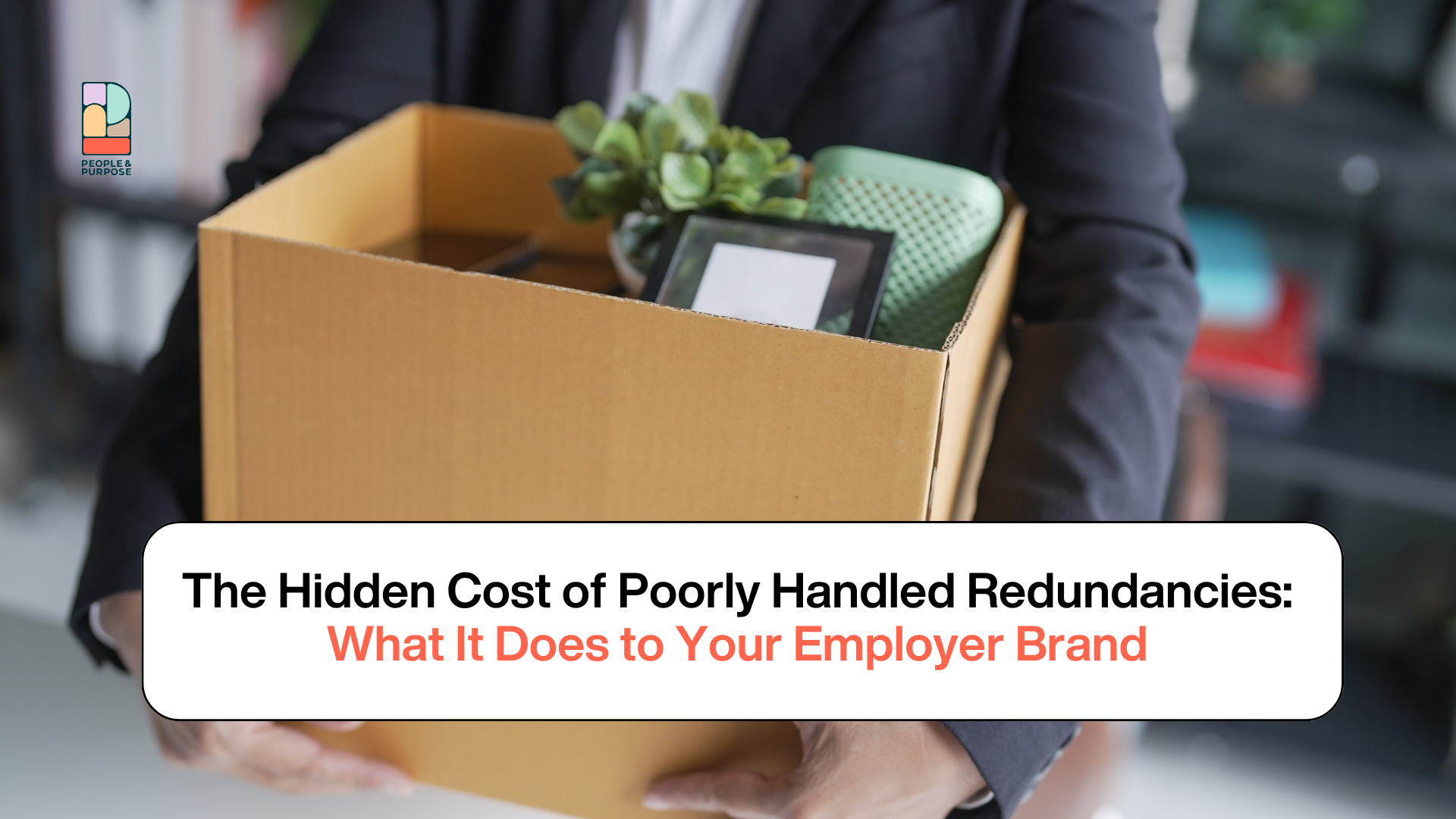
Most leaders know redundancies are hard.
What fewer realise is how much a poorly handled process continues to cost the business long after the announcement is made.
We see it from both sides of the table.
As recruiters, we hear how exiting employees talk about their former employer. As advisors to organisations going through change, we see what it costs the businesses that didn't quite get it right.
The damage rarely shows up in a single P&L line. It shows up in slower hiring, harder salary negotiations, weaker referrals, and a quieter erosion of the culture you've spent years building.
The reputation hit you can actually measure
Poorly handled redundancies leave a public footprint:
- A wave of Glassdoor and LinkedIn reviews that future candidates will read
- Sentiment shifts inside professional networks and industry circles
- Higher candidate drop-off rates once your name is searched
- Longer time-to-hire on senior roles within 6 to 12 months
Senior candidates do reference checks on employers before they apply, not after. One difficult exit story, repeated through the right networks, can quietly close doors for an entire year of hiring.
What it costs the people who stay
The team that remains often carries the heaviest weight.
- Trust in leadership drops, especially if communication was rushed or inconsistent
- High performers update their CVs first, not last
- Managers lose confidence in how to lead through future change
- Productivity dips for far longer than most workforce plans assume
A redundancy isn't just an exit event. It is a leadership moment that the rest of your team is watching closely.
What we see from the recruiter side
Exiting employees become candidates, customers, referrers, and sometimes, future hiring managers at your competitors.
How they describe their last 30 days with you tends to define your employer brand for the next 3 years.
The organisations that protect their reputation through change usually share three habits:
- They give people real transition support, not a template. Genuine outplacement that includes recruiter insight, market intelligence, and personalised career strategy, not a generic resume builder.
- They equip their managers before, during, and after. The frontline conversations are where employer brand is made or broken. Managers need scripts, support, and a clear path for the people staying.
- They treat the exit experience with the same care as onboarding. Dignity, clarity, and follow through. Every former employee becomes a public reviewer of your business.
The bottom line
A redundancy is one of the most public things a business does, even when the process feels internal.
The organisations that handle it well protect more than morale.
They protect their ability to hire, lead, and grow for the next decade.
If you're planning, navigating, or rethinking a workforce transition
We work with HR and People & Culture leaders to design outplacement and executive transition programs that protect your brand, your remaining team, and the people leaving.
Learn more about how we support organisations through workforce change.
Click here to explore our Outplacement & Transition services

Here’s what our community has been talking about this week
To view these posts and join the discussion, you’ll need to be a member of our free People & Purpose Community.
Your Culture Lives in Your Offboarding, Not Your Onboarding Deck
Every careers page says the same things. Culture, growth, family. But the truth about a company's culture isn't found in the careers section. It's found in what happens when someone is on their way out.
Outplacement Has Changed. Has Yours?
For a long time, outplacement was treated like a checkbox. A workshop. A portal. A few templates. The people on the receiving end rarely felt supported, and the businesses offering it rarely got the goodwill they were hoping for. That has changed.
Hiring Well Isn't About Filling a Seat
A great hire isn't just someone who can do the job. They fit the rhythm of your business, sharpen the team around them, and add to the culture you've worked hard to build.
With purpose,
The People & Purpose Team




Responses